Software that learns each operator's own words for how they want an aircraft to fly — smoother, tighter, more aggressive — and tunes its handling to that operator over time.
One brain · any aircraft · learns each operator
— and tunes how it flies to that person over time
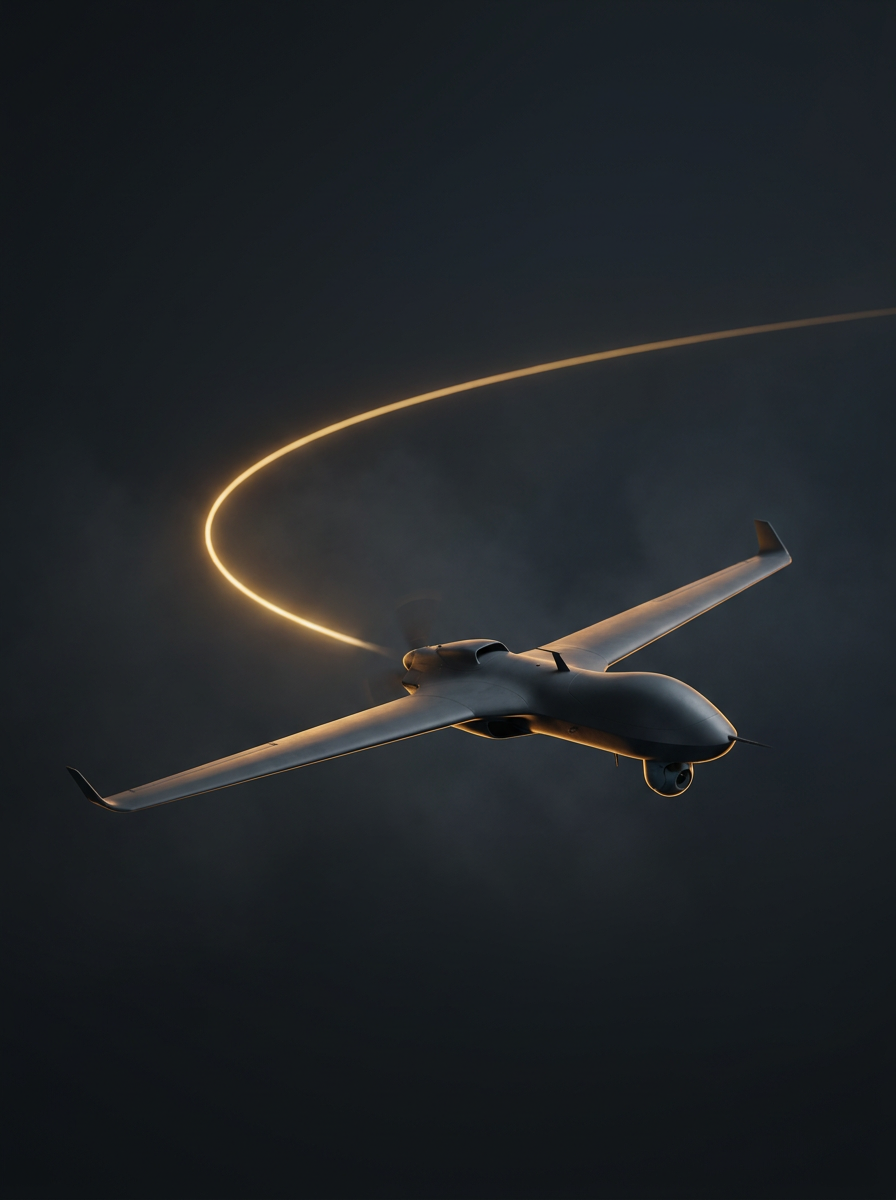
Autonomy and human-machine teaming are exploding — one operator now directs many aircraft at once. But every drone handles the same way for every operator. Your "smoother" and mine get the exact same response. The aircraft never gets to know the person flying it.
Handling is set by factory defaults and config files an engineer tuned. The same numbers for everyone. The aircraft never adapts to the operator, and it never changes for them.
The same word means something different to every pilot. Our software learns what you mean by "tighter" or "smoother," tunes the aircraft's handling to you, and remembers it. The more you fly, the more it's yours.
Across the field, the bottleneck isn't the airframe — it's the operator. Training pilots takes time, and the future is human-machine teaming, where one person directs many aircraft and needs each to behave the way they expect. Letting an operator shape handling in plain language — and having the aircraft learn them — is exactly that missing layer.
Commercial flying is the on-ramp — no procurement cycle, fast iteration, real operators tuning how their aircraft fly every day. The same platform scales straight into defense, where the need is largest.
The same software learns an operator's preference for almost any aircraft they fly or supervise. Commercial is where we start; defense — across allied and international forces — is where it scales.
This personalizes how an aircraft flies and handles and learns its operator. It does not target, arm, or control munitions. Flight dynamics, handling, operator onboarding, and autonomy support only — civilian and defense.
Militaries are racing to field thousands of autonomous aircraft, the commercial skies are filling fast, and consumer drones are already in millions of hands. The aircraft are getting cheap and plentiful — across every tier, the value is moving to the software and the operator.
Sources: Grand View Research (military, commercial, and consumer drone markets). Military forecast to 2033; commercial and consumer to 2030.
A maker builds the aircraft once. We earn every month it flies — a recurring per-aircraft software license, folded into the product or program. Recurring intelligence, recurring revenue.
| Scenario | Aircraft running our layer | Our revenue / year |
|---|---|---|
| Early | 25,000 | $7.5M |
| Growing | 100,000 | $30M |
| Strong | 500,000 | $150M |
| At scale | 2,000,000 | $600M |
Illustrative at a blended ~$25 per aircraft per month — final pricing is set per partner and tier. Consumer drones mostly monetize as a one-time license at point of sale; the recurring engine is commercial and defense. Even 2,000,000 aircraft is a sliver of the global fleet, and every aircraft pays each month it runs.
A provisional patent application has been filed on the core method, with broad cross-domain claims in progress. The method is held as a trade secret and is not disclosed here. Full details are shared only under a signed NDA.
For the first time, an aircraft can learn each operator's own language for how they want it to fly — and become truly theirs. It works today, in simulation. We're building the company that brings it to the world's skies.
Confidential · Flight-handling & operator layer, not a weapons system · Do not share without a signed NDA